
About
“Have nothing in your houses that you do not know to be useful or believe to be beautiful.”.
William Morris
"The Beauty of Life"
1880
In 2014, the husband and I bought a 19th-century one-room schoolhouse in a backwater Adirondack township with demonstrably more bears than people. It was our first house and, we figured, our last. We were middle-aged, childless, and frustrated after several years of trying to design a house from scratch to fit the swampy, stony lot we’d first bought for the purpose. We were well-versed in the vagaries of the tiny spaces inhabited by renters of modest means in the cities where we had hung our hats after leaving our childhood homes (the Adirondack mountains for me, the Welsh valleys for him) in pursuit of careers that didn’t involve dying in penury. After the mean little rooms of New York and London, a whole schoolhouse to ourselves in the vastness of the Adirondack forest felt like luxury. Indeed it was so small and so affordable we were able to furnish it with objects we never would have dreamed of buying in what passes for an average-sized house in America. A tiny cottage in the woods with beautiful things in it. What more could we need?
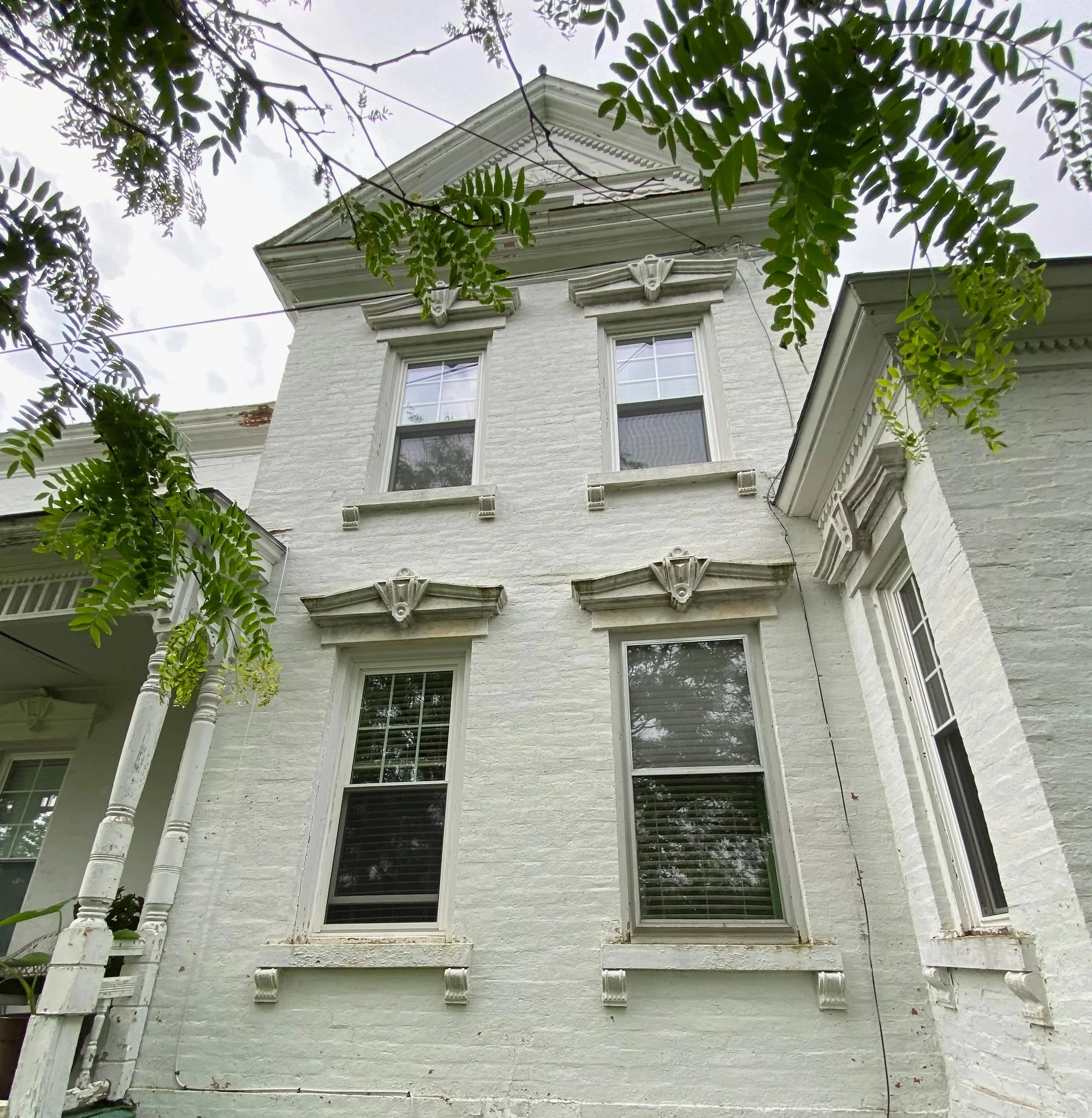
Ten years, one surprise baby, a brood of pets and a pandemic later, we moved to a large Victorian in a nearby village with room to swing a dead cat, which was fitting because two of ours did in fact depart shortly thereafter (of old age, not misuse). The schoolhouse had simply grown too small to accommodate a family, a zoo and two offices after a contingent WFH arrangement became permanent. So we rented out our beloved schoolhouse, went shopping for a mortgage at the worst possible time, put dying in penury back on the menu and settled into the white brick Queen Anne my daughter sensibly christened the Magick House. And here we remain, trying to kit it out with things to sit down on that won’t break the bank while turning part of it into a second rental to pay for the upkeep on a persnickety house which - like all such queens - was built for conspicuous consumption in the age of Victoria, but stands to beggar three barely middle class fugitives of the age of the Abominable Amber King and his Redcaps.
All sensible people need a sanctuary from that rabble, and I make mine from bricolage, which is a six-dollar word for “whatever I can lay hands on given my means at the time.” I often wonder what William Morris, beloved doyen of both the revolutionary socialist and the patrician gentry, would make of the contradictions of our time, when beautiful and useful things (alongside a whole lot of schlock) are available to more and more people by virtue of the melding of art and machine under the mode of production he rightly despised for its dispossession of those on whose backs it rests. “I do not want art for a few, any more than I want education for a few, or freedom for a few” he declared, yet in his lifetime faced the paradox that his own art, far from being accessible to the masses, wound up “ministering to the swinish luxury of the rich” by virtue of its rarefied value.
The material culture in these pages runs the gamut, from Marketplace to Target to thrift shop to pretentious boutique. I procure less and less from the latter these days, partly due to the considerable financial demands of the house these furnishings occupy, and partly due to the degradation of luxury-priced items, like as not these days to be tat masquerading as treasure. If it all hangs together in a sort of eldritch vernacular, that is because my own Adirondack aesthetic was formed over the course of an Adirondack upbringing, through mountain-born eyes that saw the forest not as an object of desire to be conquered or coveted or emulated, but as grist to the mill of childhood whimsy, the manifestation of every fairy tale I’d ever read. You will find no moose quilts or bruin lampshades here, nor the predictable and impractical twiggy idiom of the Great Camp. This is the land of agreeable horror seen from witchhobble height, the thorny traffic of the understory all too easily overlooked when you are busy trying to stamp your mark upon it. Literally anything could happen here, and probably does, in the hidden places beneath briar and bramble. As the outside world darkens with the dimming of all possibilities but one, our interior worlds must be places where anything can happen, as we bide our time waiting for the tide to turn.